Industrial Automation Market Assessment: Evaluating Robotics, Controls, Sensors, and Software Adoption
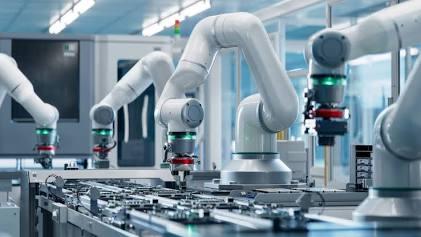
Industrial automation demand is expanding across robotics, control systems, sensors and production software, but purchasing decisions differ considerably by industry. A high-volume automotive plant may prioritise robotic welding and assembly, while a food manufacturer may need automated inspection, packaging and traceability. The commercial opportunity depends on the production problem, the installed equipment base and the economics of replacing manual or legacy processes.
The International Federation of Robotics reported in September 2026 that manufacturers installed approximately 603,000 industrial robots worldwide in 2025, an 11% increase over the previous year. The global operational stock reached 5.079 million units. Demand was particularly strong in metal and machinery manufacturing, where installations increased by 22%, while automotive and electronics each recorded 10% growth. These figures point to expanding automation demand, but they also show why suppliers need to examine individual applications rather than rely on a single market growth estimate.
Where Is Automation Spending Concentrated?
Robotics is only one part of the market. Automation investments span equipment, control systems, sensing, industrial software and the integration services needed to make them work together.
Industrial robots: Welding, assembly, palletising, machine tending and repetitive handling in applications where throughput, consistency or safety justify automation.
Control systems: Programmable logic controllers, motion controllers, drives and human-machine interfaces that coordinate production equipment.
Sensors and machine vision: Measurement, defect detection, position tracking and process monitoring where quality and traceability are important.
Industrial software: Manufacturing execution, production scheduling, supervisory control and data acquisition, and analytics applications.
System integration: Equipment commissioning, programming, safety validation, legacy-system connectivity and ongoing technical support.
Each category has a different buying cycle.
Robotics may depend on capital expenditure and line redesign, while sensors or control upgrades can be purchased to resolve a specific production bottleneck.
Software adoption may require longer planning because data quality and system compatibility affect implementation.
To gain more information, refer to: Nexdigm Insights
The Application Determines the Business Case
Manufacturers do not purchase automation simply to increase the number of automated processes. They need a measurable improvement in output, quality, safety or operating cost.
For example, robot deployment can reduce repetitive manual handling, but the financial return depends on utilisation, cycle time, integration costs, maintenance and the ability to redeploy workers. Machine vision can reduce inspection time and improve consistency, although performance depends on defect variability, lighting, product presentation and false-rejection rates.
The International Federation of Robotics reported that India installed a record 10,500 industrial robots in 2025, up 15% year on year. The increase signals a growing domestic automation market, but suppliers still need to identify which sectors and production applications are generating purchase-ready demand.
For an Industrial automation market assessment, Nexdigm can evaluate demand by application, customer industry, installed equipment, replacement cycle and investment economics. This helps distinguish large theoretical markets from applications where manufacturers have a clear operational reason to purchase.
Industrial Automation Opportunity Assessment Framework
1. Define the Production Problem
Identify whether customers need higher throughput, lower defect rates, improved safety, reduced downtime or greater production flexibility.
2. Map the Technology Requirement
Determine the relevant mix of robotics, controls, sensors, software and integration services.
3. Validate the Investment Case
Estimate addressable installations, capital requirements, operating savings, payback periods and technical barriers.
4. Prioritise Applications and Customers
Rank opportunities by purchasing readiness, repeatability, achievable margins and the supplier's ability to deliver reliable implementation.
Nexdigm Case Study: Prioritising Automation Applications
Nexdigm assessed automation demand across 160 manufacturing plants in automotive components, food processing and industrial equipment. The team evaluated 11 use cases, including robotic handling, machine vision, control-system upgrades and production analytics. Forty-six plants had defined investment requirements, with machine vision and robotic machine tending accounting for the largest qualified opportunity.
To take the next step, simply visit our Request a Consultation page and share your requirements with us.
Harsh Mittal
+91-8422857704
Join the Conversation
Share Your Thoughts
Related Articles

Which Cloud Services Are Enterprises Prioritizing Next? Mapping Infrastructure, Data, Security, and AI Demand
Analyzes enterprise cloud spending shifts toward AI compute, data platforms, and FinOps. It outlines market growth, workload economics, and a 5-step model to capture high-margin demand.

Where Is Logistics Demand Growing Fastest? Assessing Freight, Warehousing, Delivery, and Supply Chain Opportunities
Logistics demand is growing unevenly, concentrating in key corridors driven by production, consumption, and e-commerce trends. Assess opportunities using five tests: physical flows, capacity, customer
From Current Parcel Flows to Future Network Needs: Building a More Reliable Courier Demand Outlook
Nexdigm's framework connects parcel demand to physical network needs using a 4-step approach: map flows, convert volume, test density, and choose the right response.